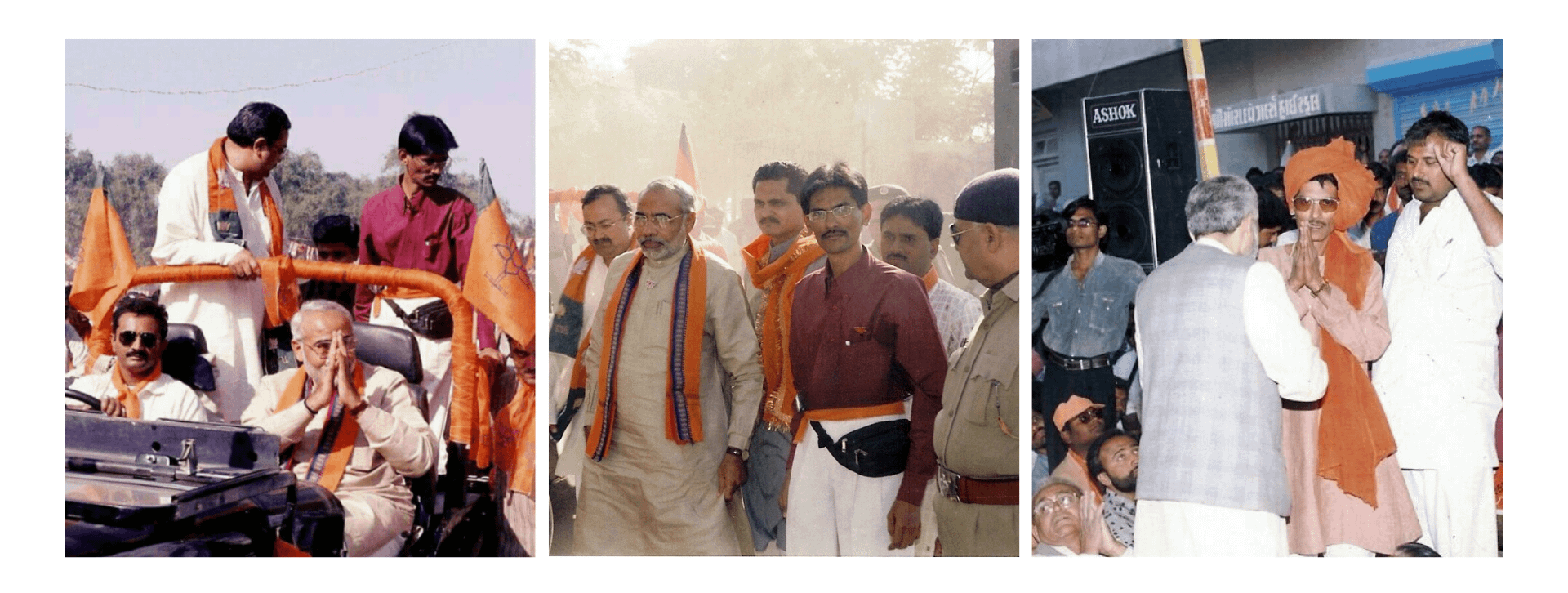
Early Political Memories
Glimpses from my early years of public life, grassroots activism, and meaningful political experiences.
My Political Journey
A journey shaped by grassroots activism, public service, and decades of political engagement.
1984
Started active involvement in social and public activities during youth.
Co-founded Valabhipur Taluka BJP along with fellow young activists.
1990
Expanded political and organizational involvement across the region.
2000
Engaged in journalism, public interaction, and grassroots outreach.
2010
Continued social and political engagement through various public initiatives.
2020 – Present
Actively sharing thoughts, experiences, and public observations through digital platforms.
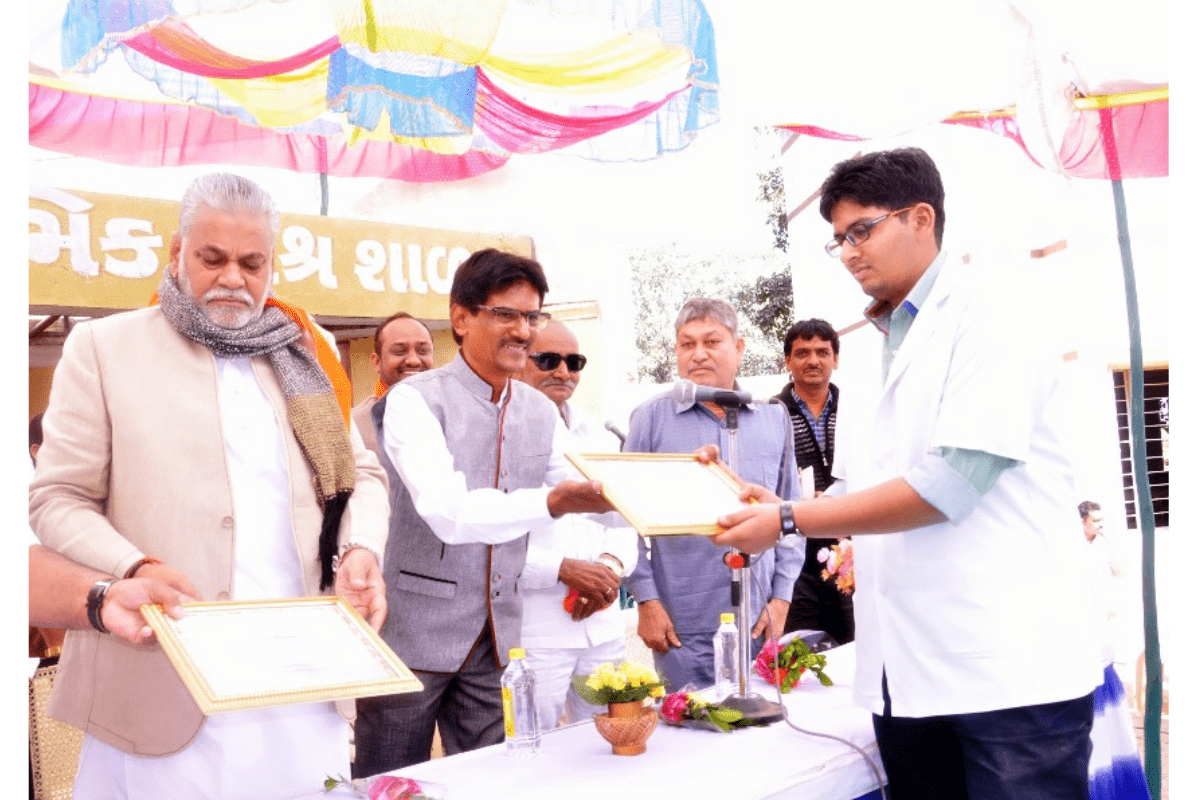
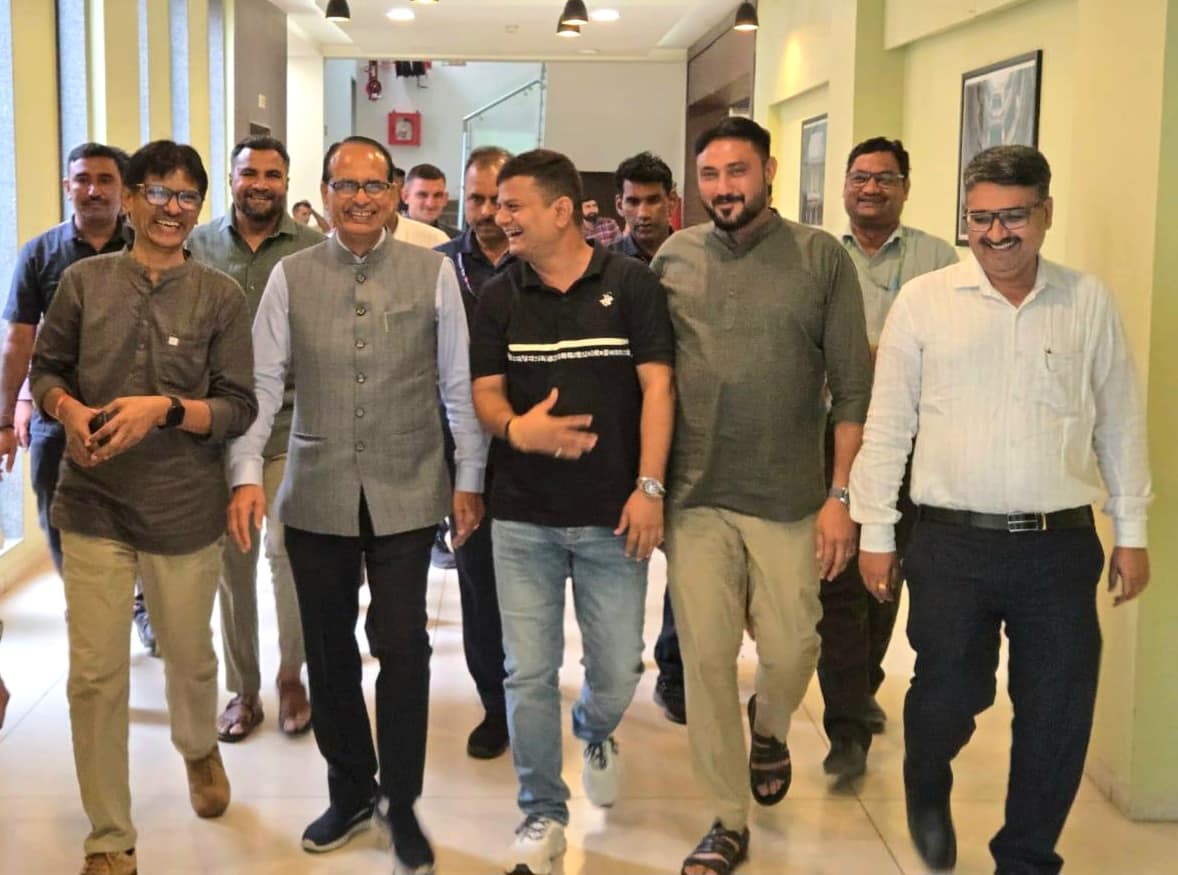
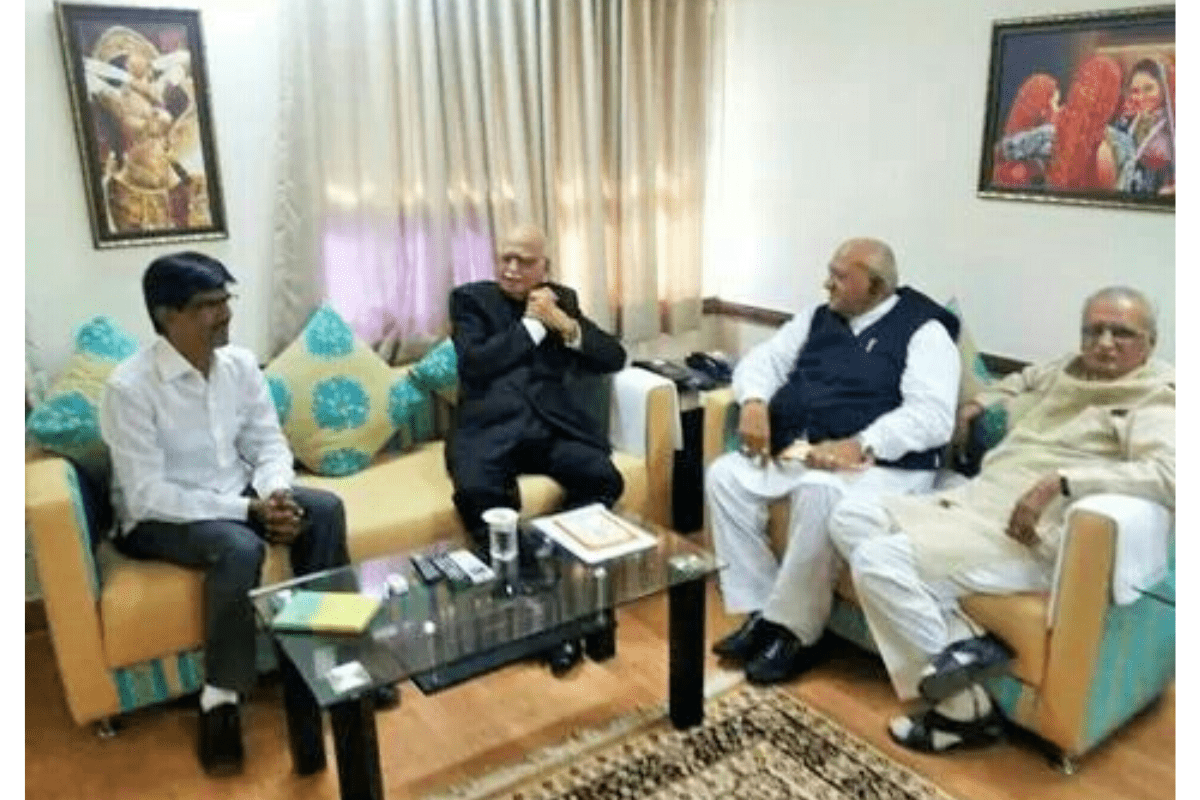
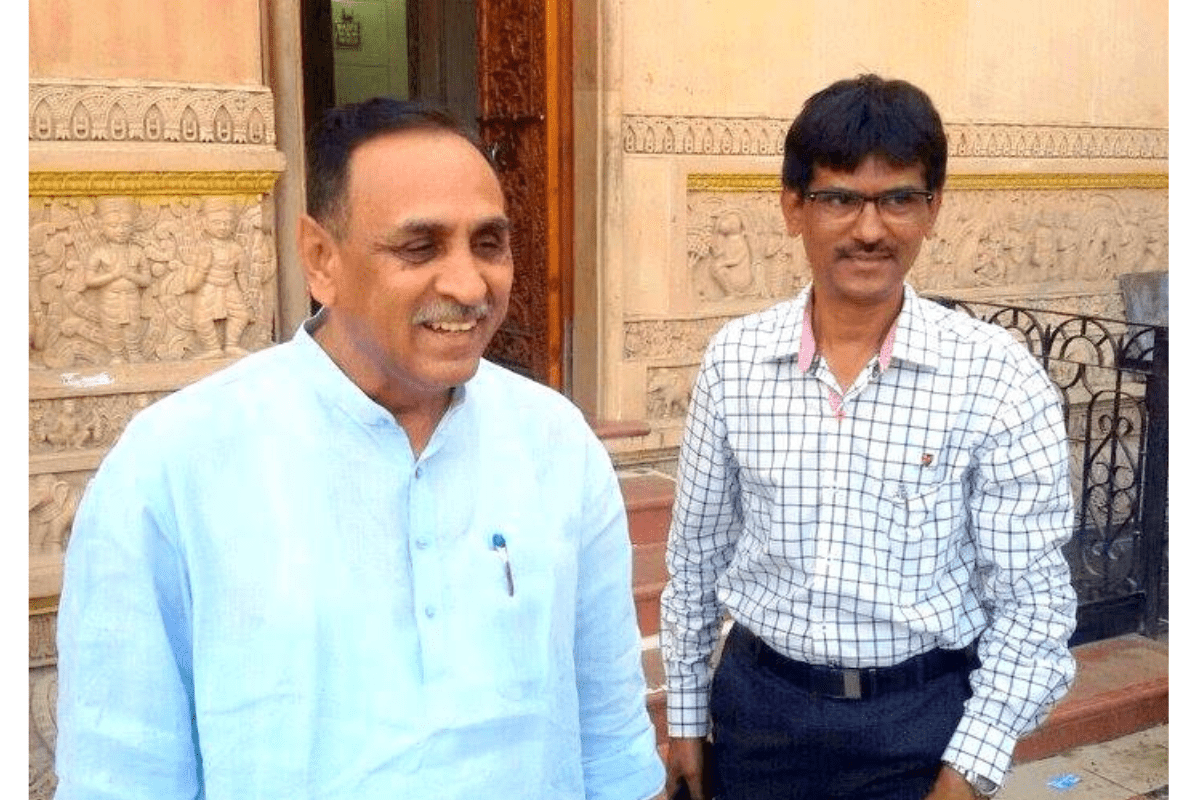
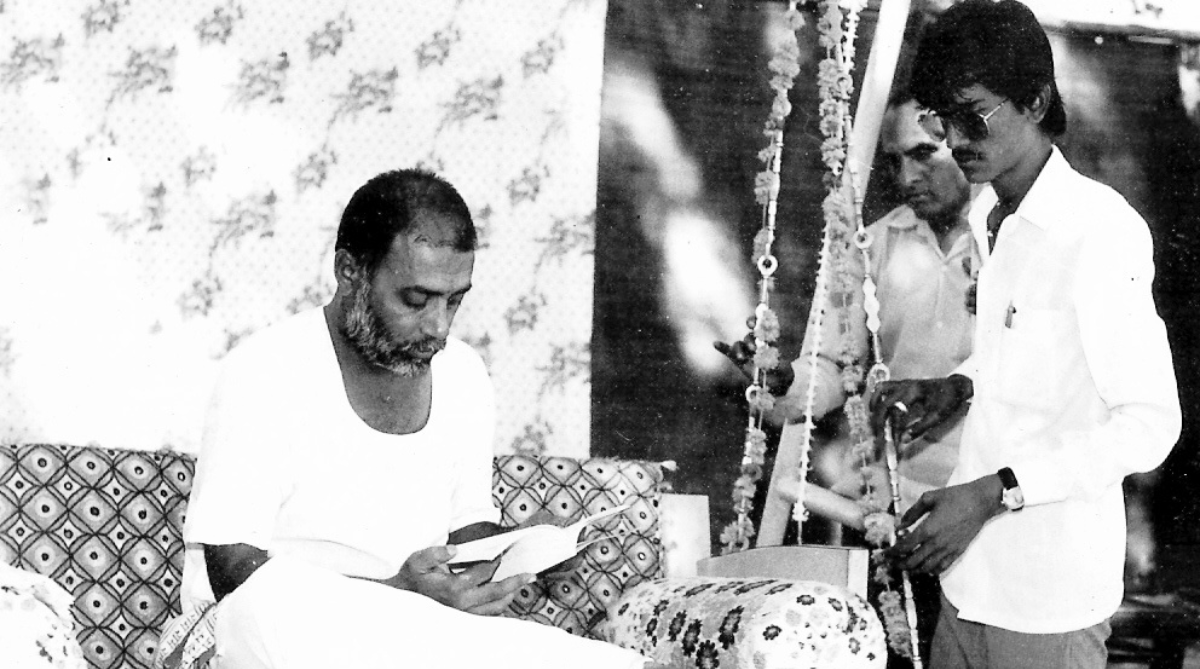
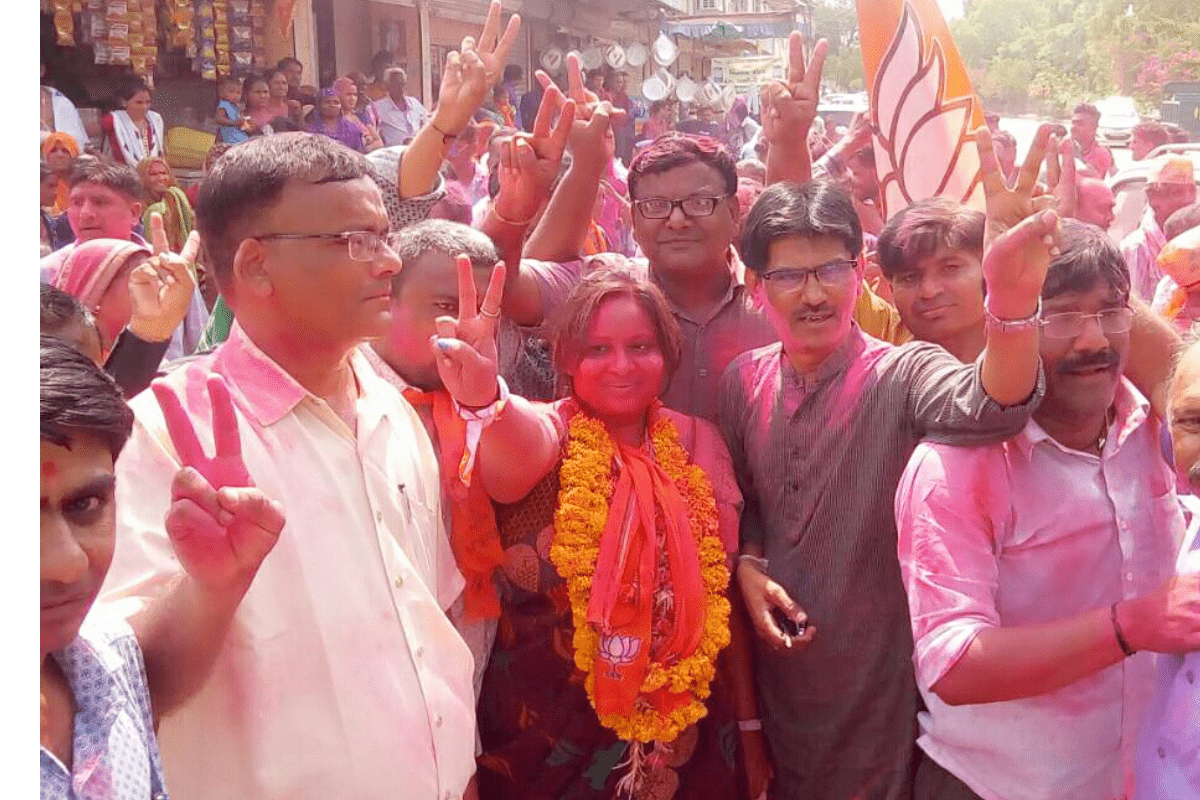
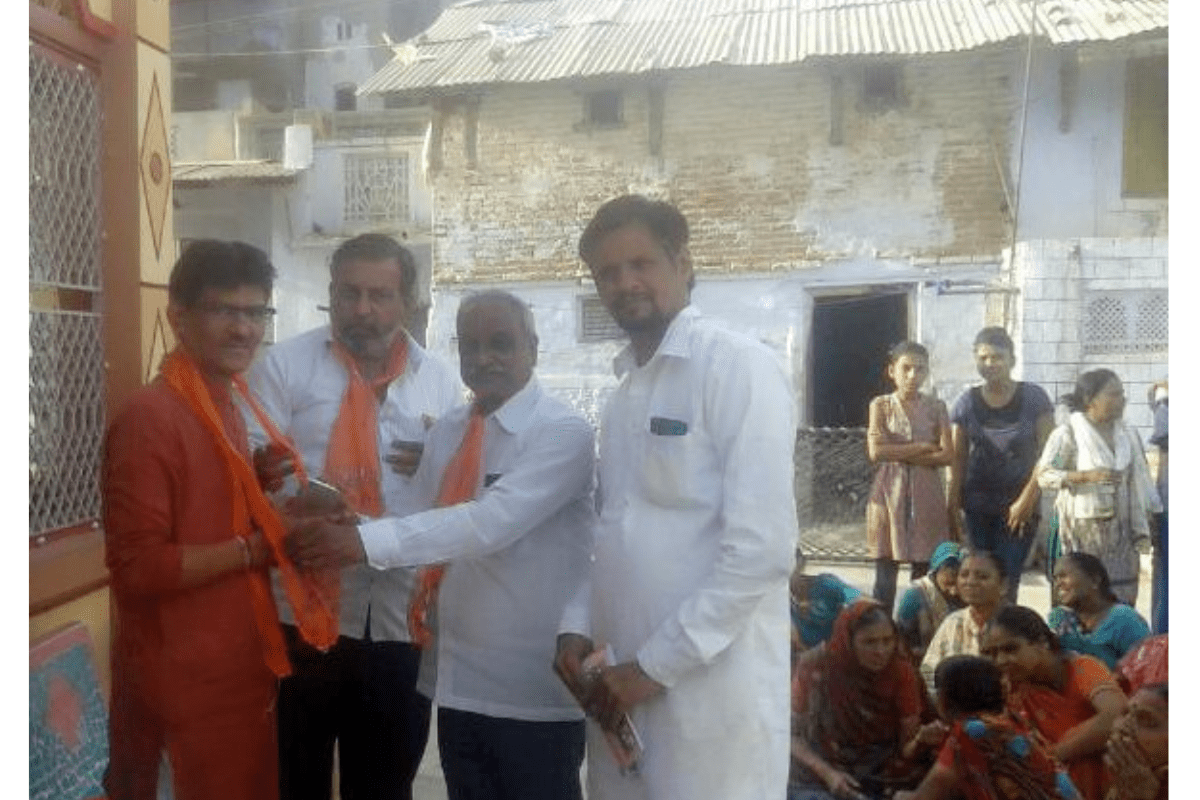
Political Moments & Public Life
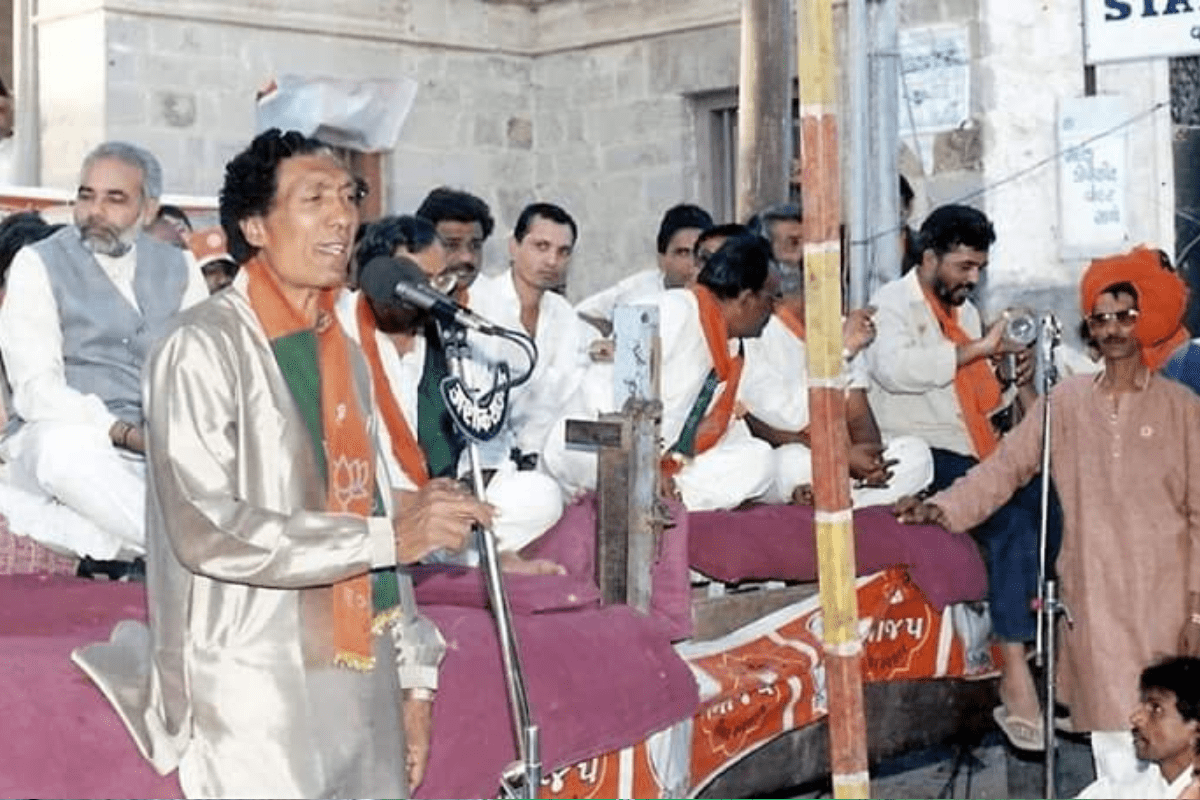
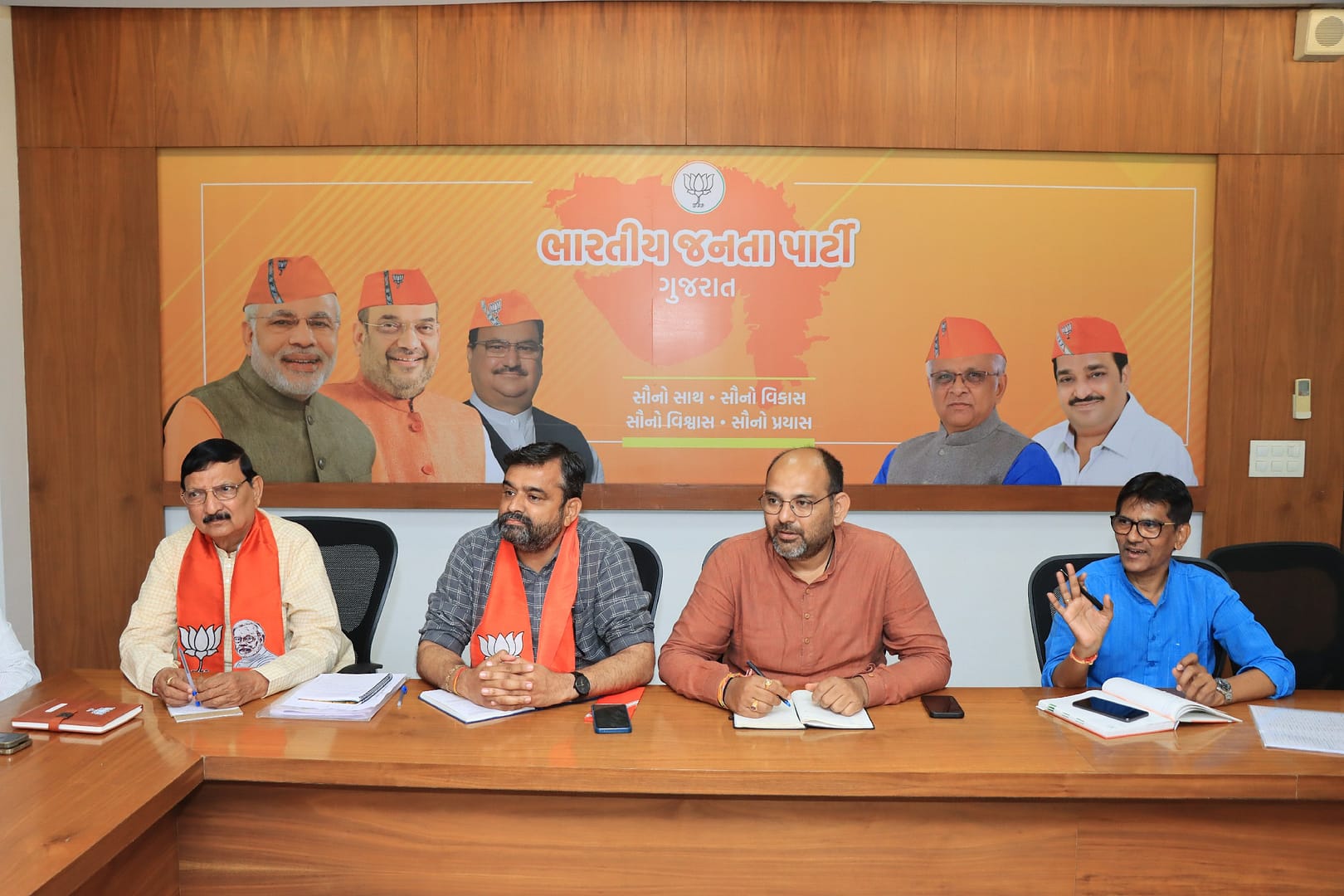
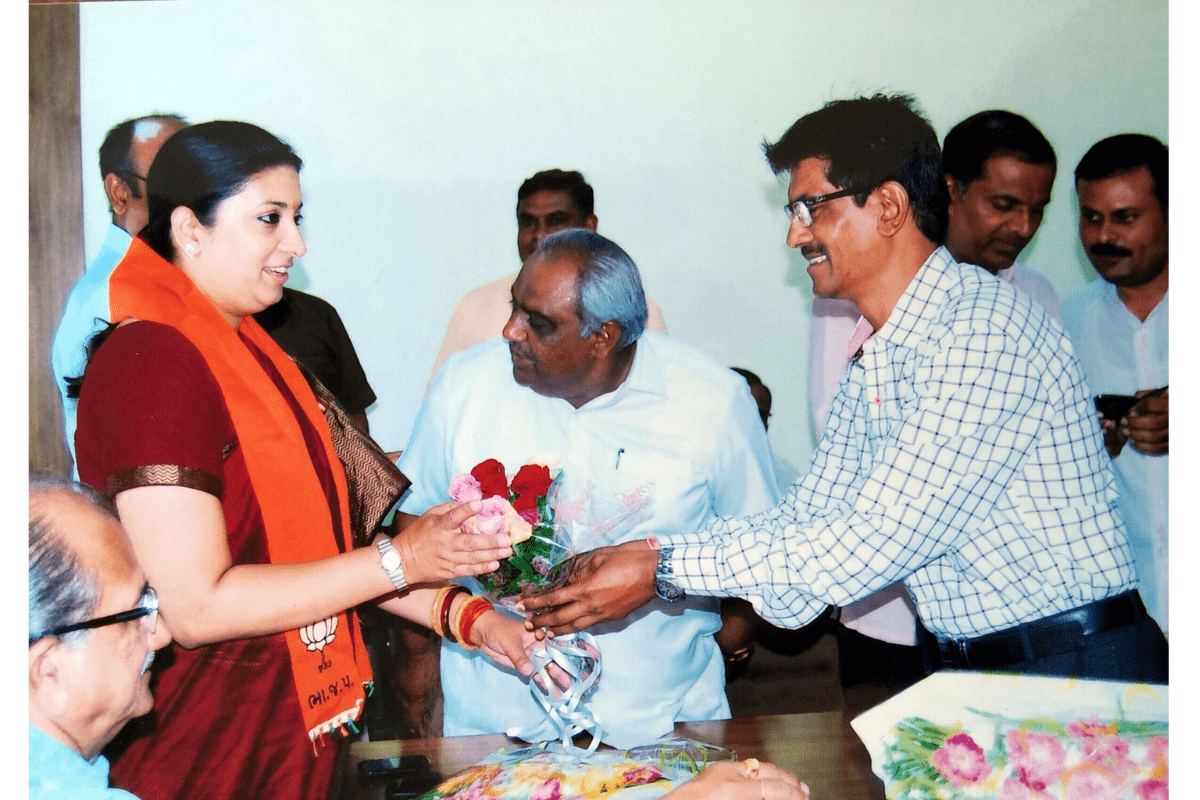
A glimpse of my journey through public engagements, leadership moments, and community connect.
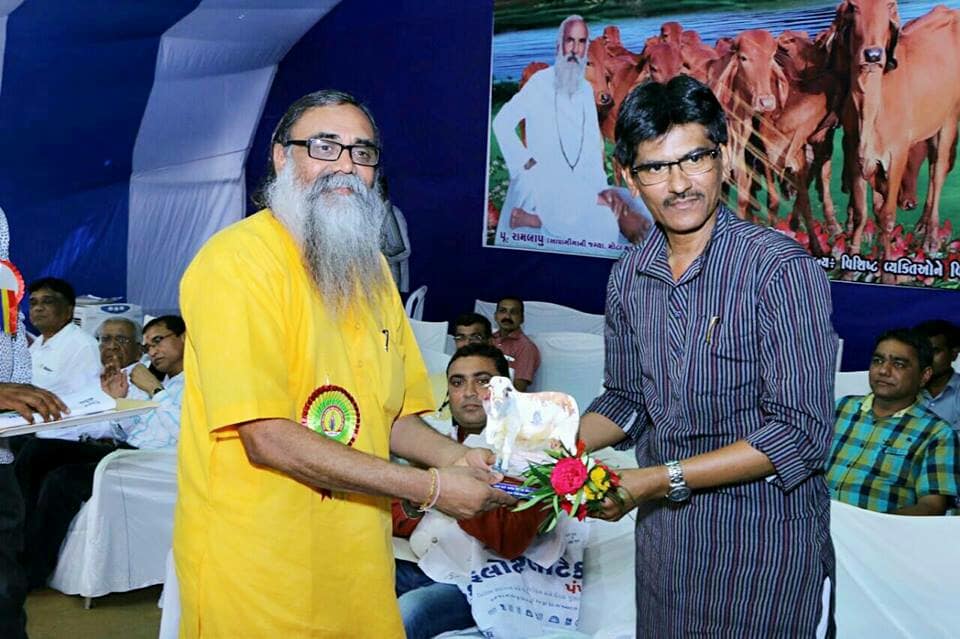
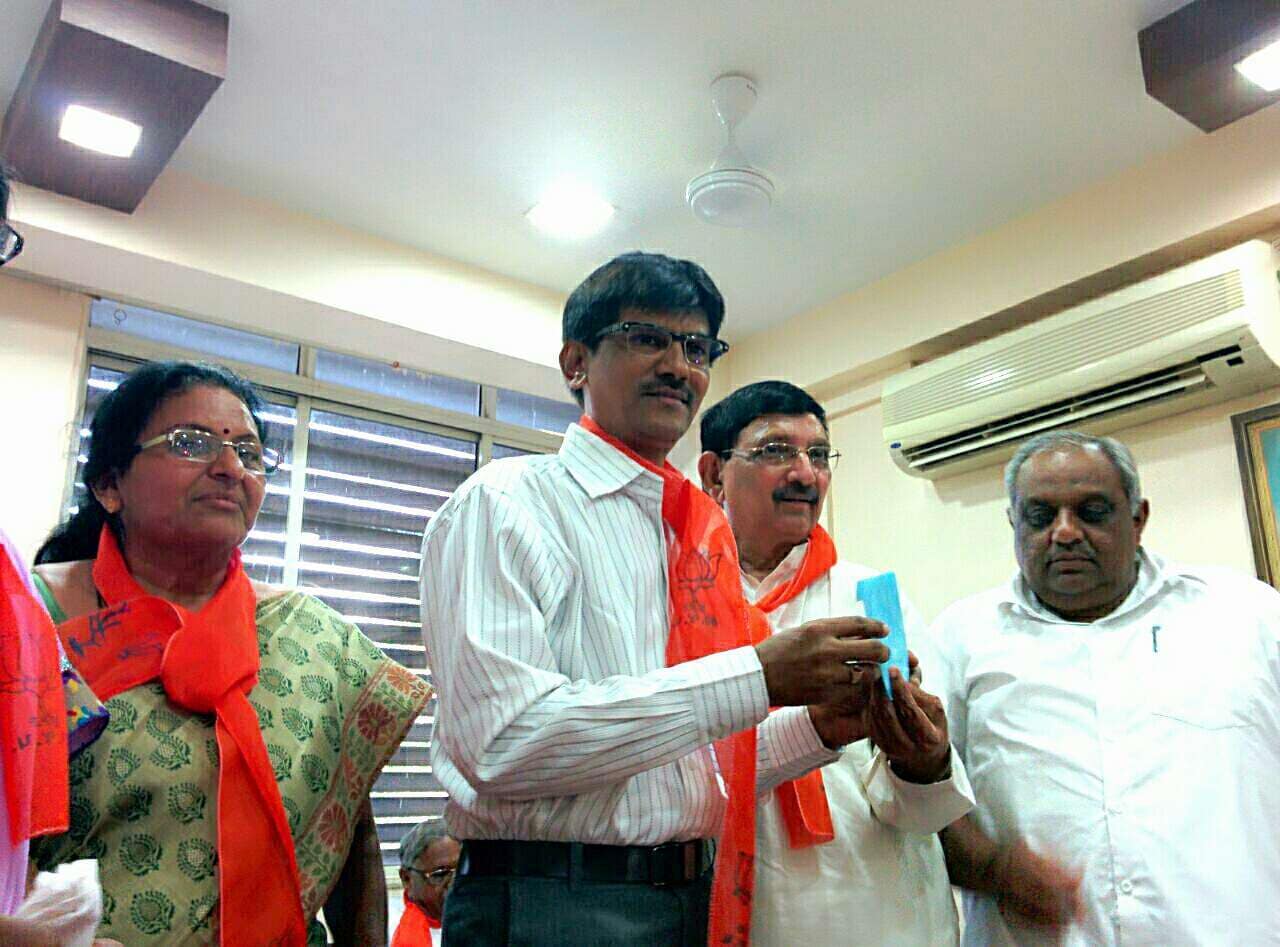
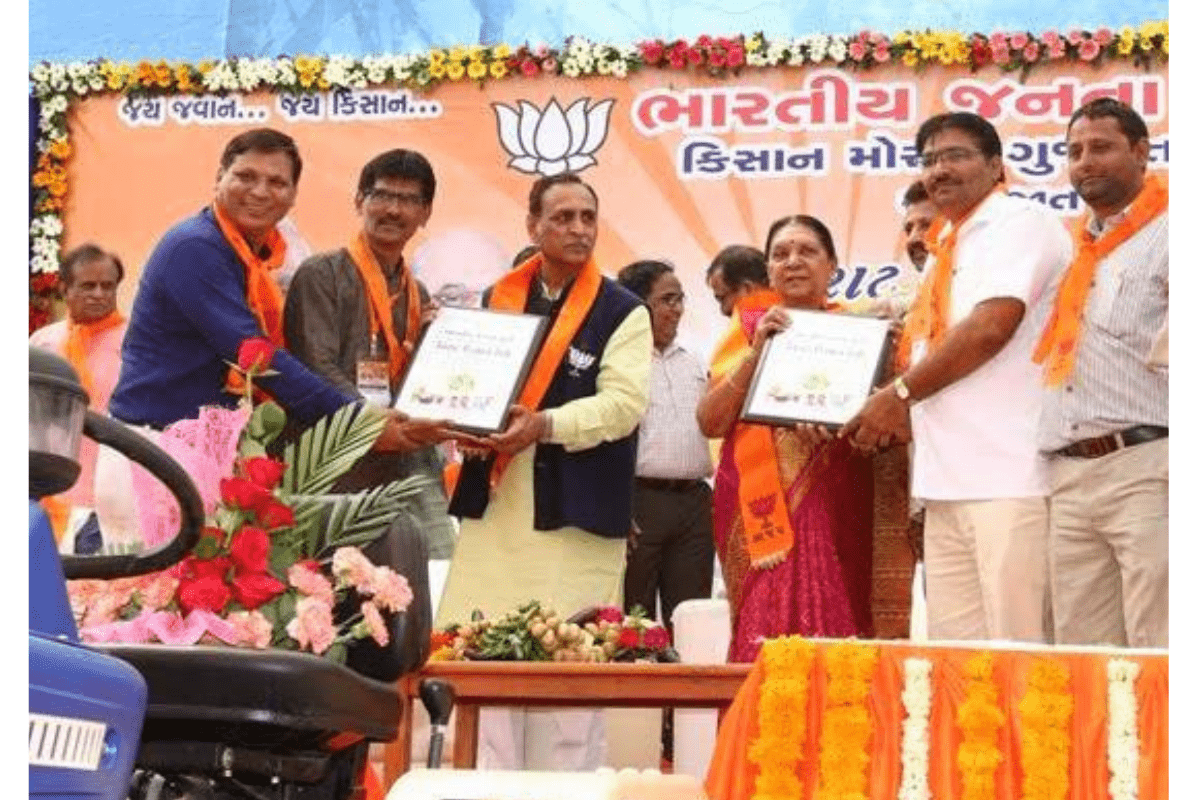
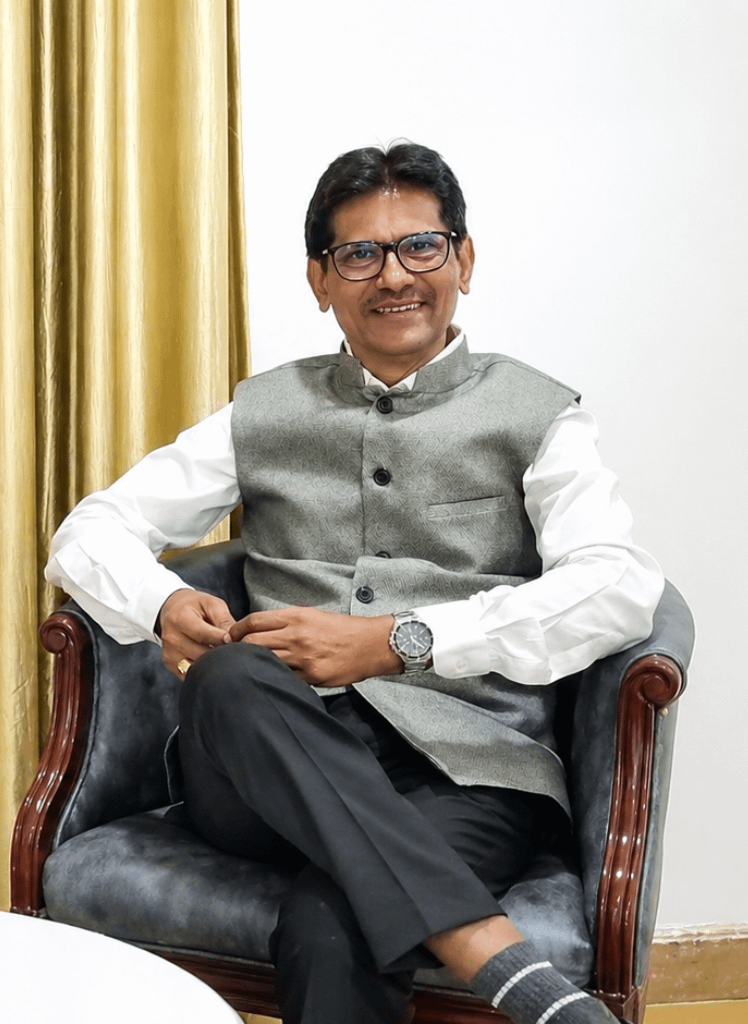
A Life Dedicated to Public Service
With decades of grassroots involvement, leadership, and unwavering commitment to society, my journey reflects a continuous effort to serve, connect, and create meaningful impact in public life.
Political Philosophy / વિચારધારા
રાજકારણ મારા માટે સત્તા નહીં પરંતુ સમાજ અને રાષ્ટ્રસેવાનો માર્ગ છે.
મને હંમેશાં લાગ્યું છે કે સમાજના ગરીબ, પછાત અને સંકોચ અનુભવનારા લોકો માટે સરકારી યોજનાઓ, સહાય અને અધિકારો સુધી પહોંચવું આજે પણ સહેલું નથી. ઘણીવાર તેઓ પોતાને એ માટે યોગ્ય માનતા જ નથી, અને ક્યાંક અપમાનિત થવાનો અથવા અવગણના અનુભવવાનો ડર પણ તેમને પાછળ રાખે છે.
મારા મતે, જરૂરી માહિતી, માર્ગદર્શન અને સહાય એવી રીતે ઉપલબ્ધ હોવી જોઈએ કે સામાન્ય માણસ સંકોચ વિના આગળ વધી શકે. સંવેદનશીલ વ્યવસ્થા, સહાનુભૂતિપૂર્ણ વર્તન અને વિશ્વાસભર્યું વાતાવરણ — એ જ સાચી જાહેર સેવા છે.”
સાચી જાહેર સેવા એ છે જ્યાં સામાન્ય માણસ સંકોચ વિના માર્ગદર્શન મેળવી શકે.
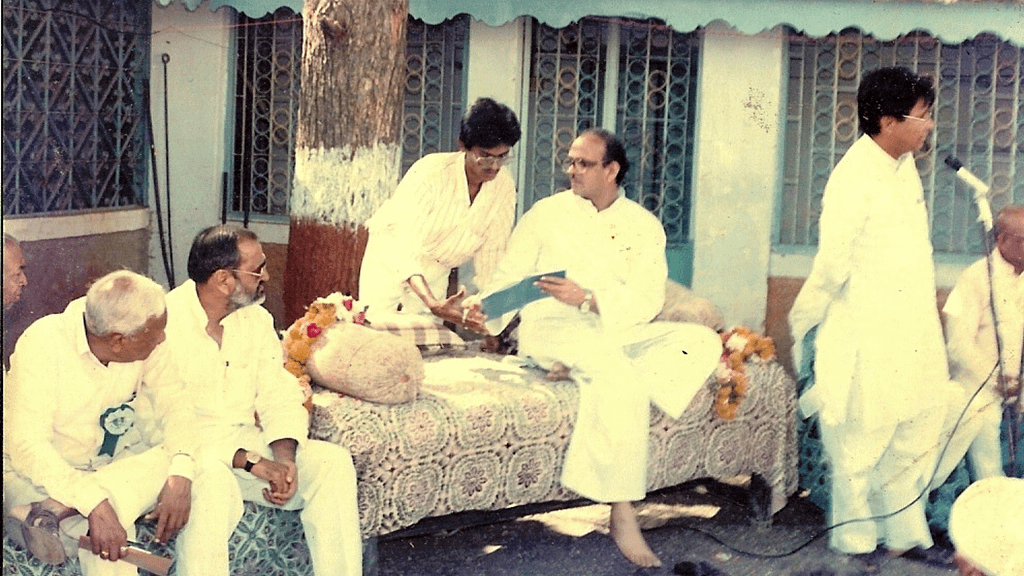
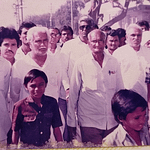
During the Bhavnagar District Tour with V. P. Singh!
A memorable moment from the era of India’s first non-Congress government.
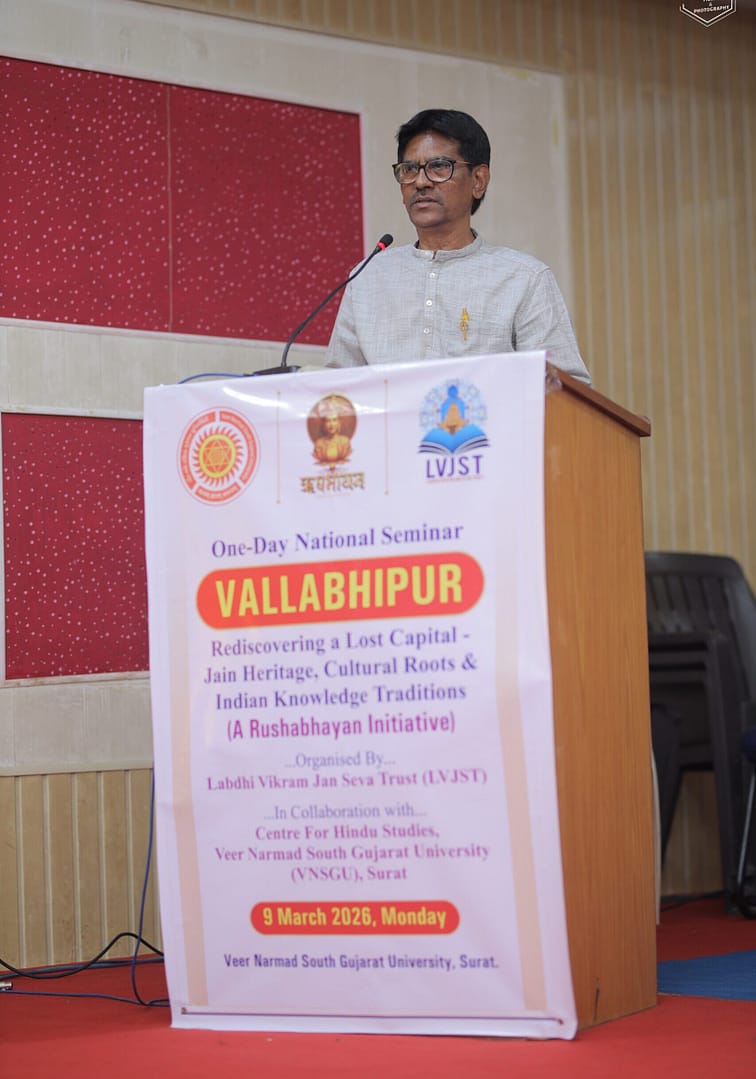
Speaking at the
Vallabhipur Seminar!
Speaking on Jain heritage and Indian knowledge traditions.
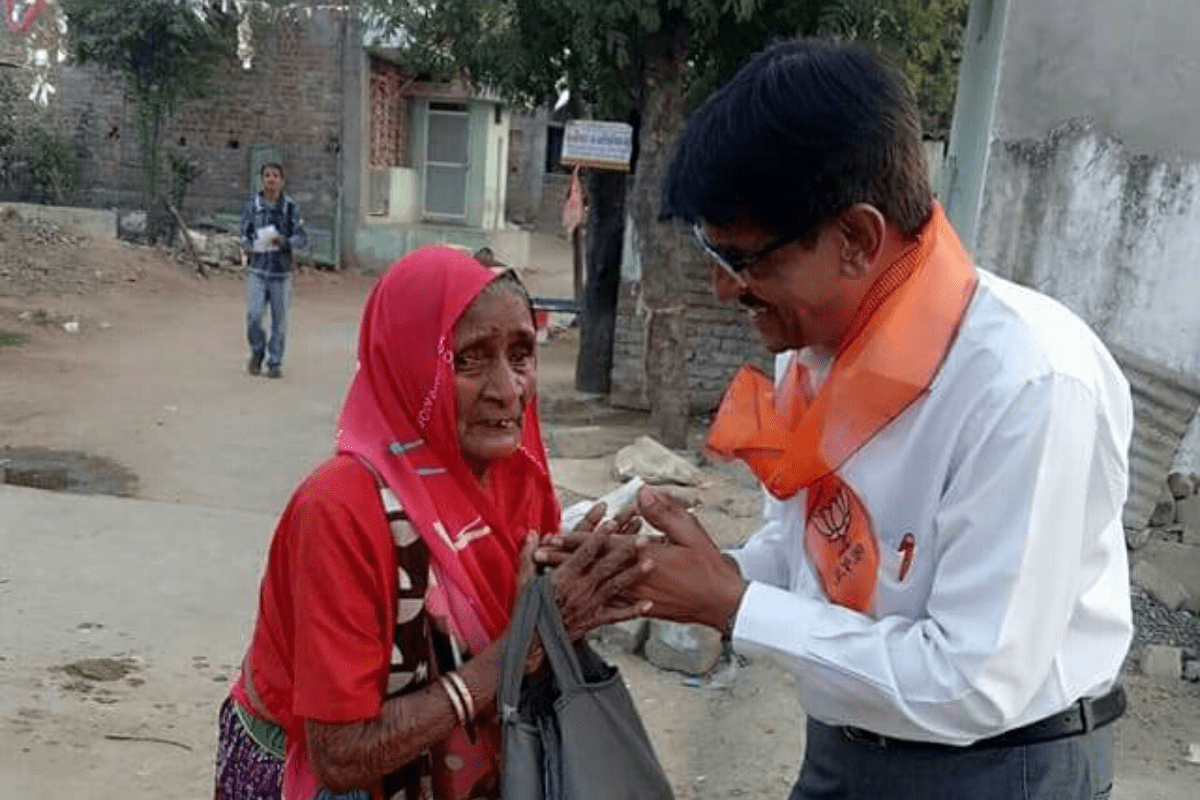
Public Outreach
& Social Connect
Moments of service, human connection, and meaningful public interaction at the grassroots level.

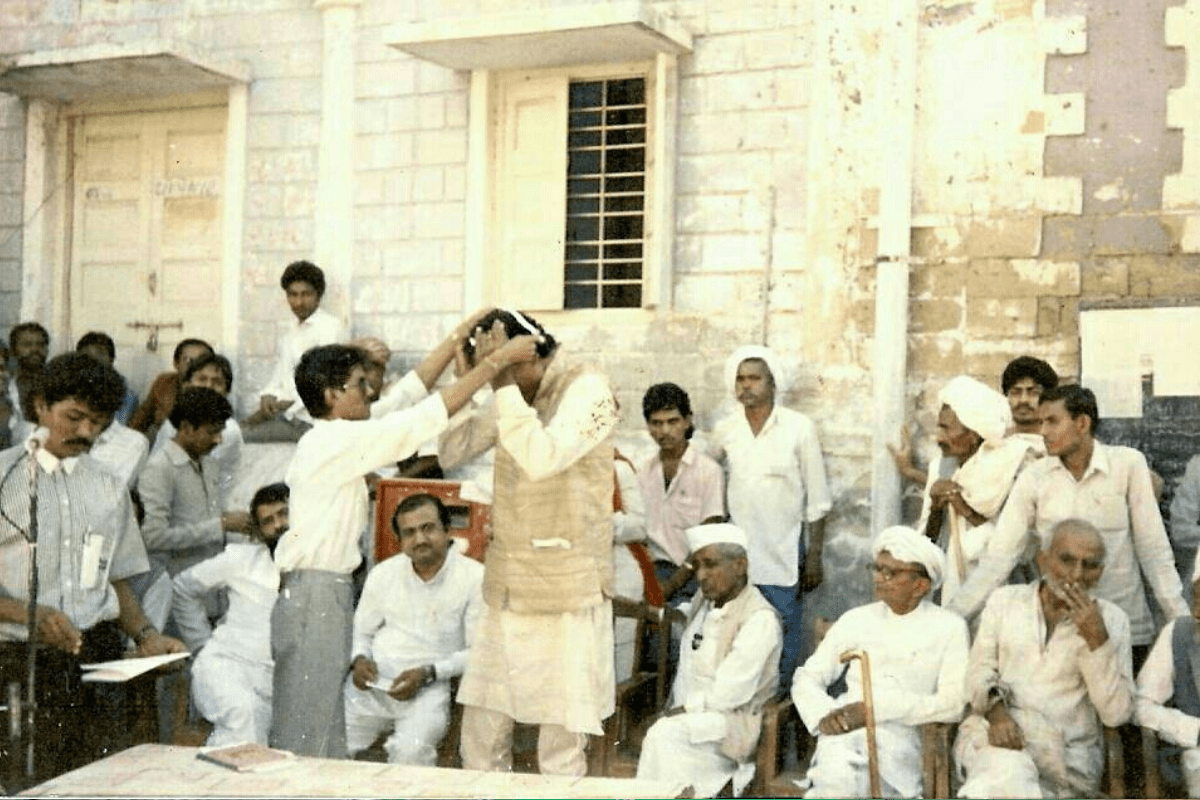
The First Footprints in Public Life: The Election of 1986
Where youthful idealism, journalism, and public service first came together in Vallabhipur.
Winning or losing is a matter of numbers; the real triumph lies in the courage to stand for the people when you are barely twenty.
Historical Anecdote / The Story
The year was 1986. Vallabhipur was witnessing an intense Nagar Panchayat election season. While experienced local leaders dominated the political landscape, a young and spirited journalist stepped forward with an unusual passion for public life and grassroots service.
What made this chapter especially remarkable was a little-known legal irony. At that time, the minimum age required to contest local body elections in Gujarat was 21. Having been born in 1966, I was technically only 20 years old. Yet, due to an extraordinary oversight during scrutiny, my nomination was officially accepted.
Though the election did not end in victory, it became a defining beginning — both for my public journey and for one of the earliest BJP-inspired local panels in Vallabhipur Taluka.
Fragments From an Era
Rare documents, memories, and moments from the early years of journalism, public life, and grassroots politics.
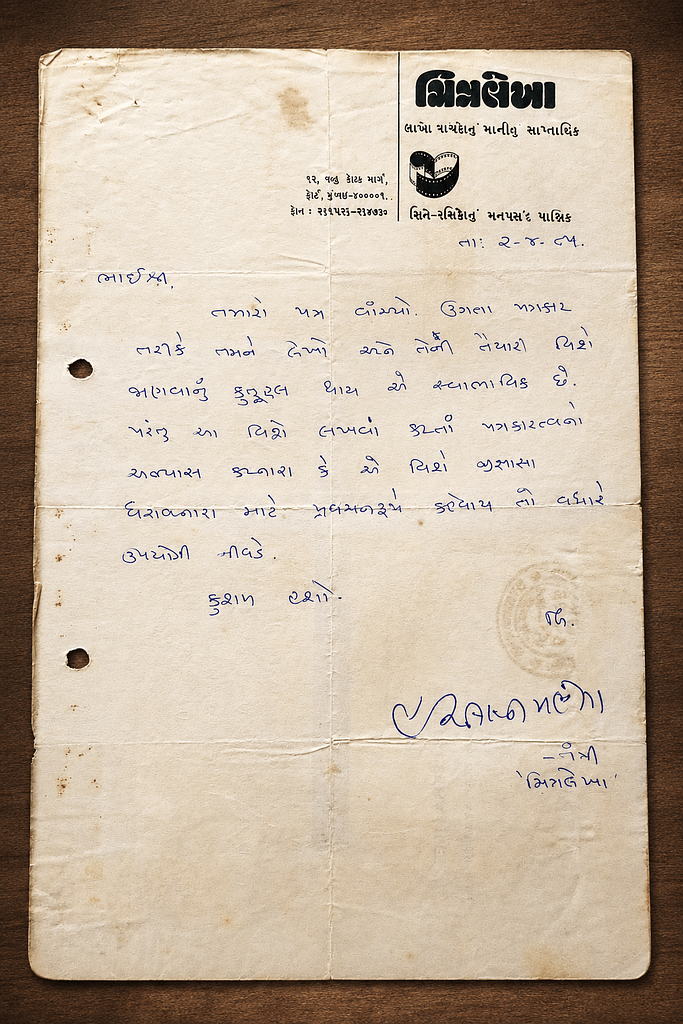
The Letter That Encouraged a Young Mind
Long before politics and public life, there was an intense curiosity about journalism, communication, and ideas. As a teenager deeply interested in reading and writing, I once wrote directly to the editor of Chitralekha — one of Gujarat’s most respected magazines of that era — asking how journalists worked and how articles and reports were created.
The letter carried even greater significance because it came from Harkisan Mehta himself — the legendary editor of Chitralekha and the author of several widely admired Gujarati novels that shaped an entire generation of readers.
What followed was something rare by today’s standards: a personal reply from the editor himself. In a time without emails, social media, or instant messaging, editors still took the time to encourage young minds and respond thoughtfully to genuine curiosity.
This letter remains more than just correspondence. It represents an era of human connection, intellectual encouragement, and respectful dialogue that quietly shaped my journey into journalism, public communication, and eventually public life.
“Sometimes a simple reply to a young mind becomes the beginning of a lifelong journey.”
A personal reply from renowned editor, journalist, and celebrated Gujarati novelist Harkisan Mehta — one of the most influential literary and media personalities of his era — during my early years of curiosity about journalism and public communication.
──────── ✦ ────────
ARCHIVE REFERENCE · CIRCA LATE 1970S / EARLY 1980S
Voices That Encouraged the Journey
Personal letters, handwritten notes, and words of encouragement from influential editors, writers, and public figures who quietly shaped the early years of my journey.
A Handwritten Blessing From Harindra Dave
During my early years of writing, journalism, and public communication, receiving a personal handwritten note from Harindra Dave carried extraordinary meaning.
Harindra Dave was not only one of Gujarat’s most respected journalists, but also a celebrated poet, novelist, editor, and literary thinker whose words influenced generations of readers across Gujarat.
At a time when editors personally encouraged young minds, such letters became more than correspondence — they became motivation, direction, and silent confidence.
This brief handwritten response remains a treasured reminder of an era when literature, journalism, and human connection carried warmth, dignity, and sincerity.
“Sometimes a few handwritten words become lifelong encouragement.”
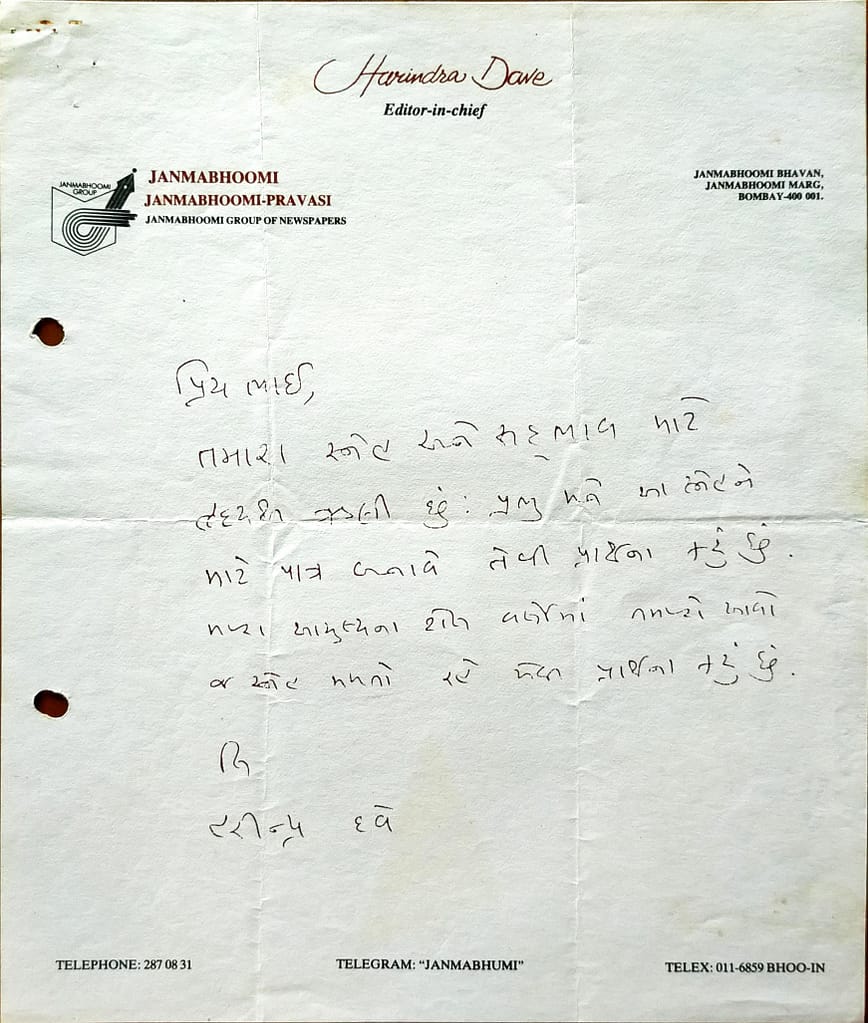
A personal handwritten note from Harindra Dave —
one of Gujarat’s most respected literary voices.
──────── ✦ ────────
POLITICAL CORRESPONDENCE · EARLY PUBLIC LIFE · 2001
A Letter of Encouragement From Narendra Modi
Among the many meaningful documents preserved over the years, this personal letter from Narendra Modi remains a memorable reminder of encouragement received during an important phase of public and organizational life.
Year 2001 · A Personal Message During a Defining Political Moment
Among the many meaningful documents preserved over the years, this personal letter from Narendra Modi remains a memorable reminder of encouragement received during an important phase of public and organizational life.
Written in October 2001, the letter reflects an era when political communication still carried warmth, personal connection, and thoughtful human interaction beyond formal public life.
At the time, Narendra Modi was stepping into a historic phase of leadership in Gujarat. Receiving such a personal message during those formative years became a source of motivation, responsibility, and quiet confidence.
Today, this preserved document stands not merely as political correspondence, but as a memory of encouragement, trust, and the enduring value of human connection in public life.
“Sometimes a few thoughtful words become lifelong strength for the journey ahead.”
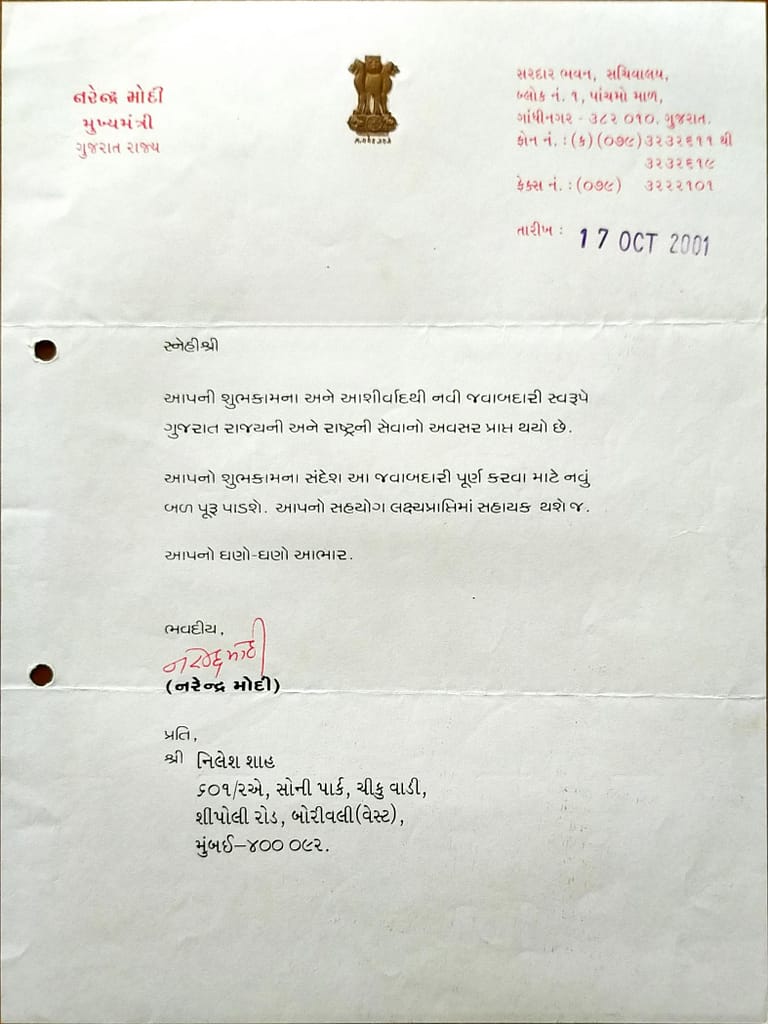
A personal letter from Narendra Modi dated October 2001, preserved among archival documents from the early years of organizational and public life.
──────── ✦ ────────
PRESS ARCHIVES · PUBLIC RESPONSE · EARLY YEARS
When Public Life Began Finding Space in Print
Before social media and digital platforms, public recognition arrived quietly through local newspapers, printed reports, and community discussions. These preserved clippings reflect some of the earliest public traces of political, social, and organizational involvement.
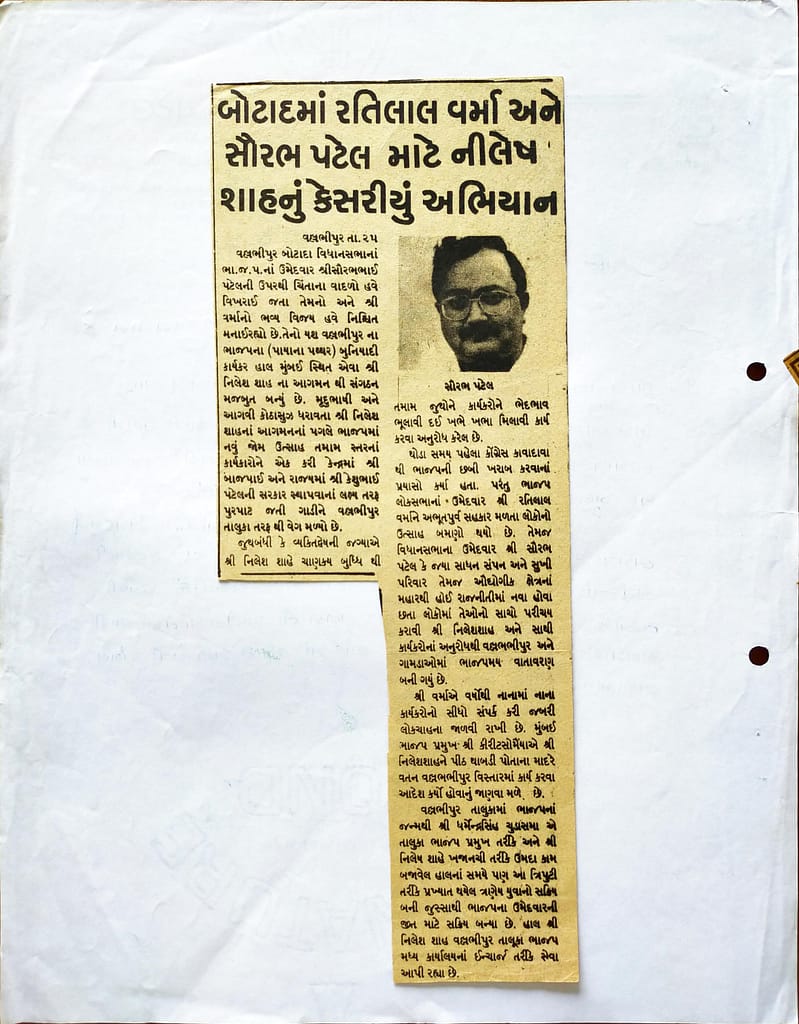
Preserved newspaper clipping from the early years of public engagement, organizational activity, and grassroots political work.
Early Newspaper Reflections on Public Life, Social Work, and Grassroots Politics
Among the preserved newspaper archives from the early years of public life, social work, and grassroots politics, these published reports remain meaningful reflections of a journey rooted in public engagement and organizational activity.
Long before digital media and instant communication became common, local newspapers played an important role in documenting public concerns, community efforts, and emerging political voices. These clippings capture moments when social initiatives and public-interest activities began receiving wider public attention.
The reports reflect a period of active grassroots involvement — from organizational responsibilities and civic participation to public outreach and community-centered efforts that gradually shaped a larger public journey.
Though modest in appearance, such newspaper references carried deep significance during that era. They represented recognition, encouragement, and growing public trust within society and organizational circles.
Today, these preserved newspaper clippings stand not merely as archives, but as reminders of sincere public work, early dedication, and the enduring connection between journalism and public life.
“Sometimes a small newspaper mention quietly becomes part of a much larger journey.”
──────── ✦ ────────
BROADCASTING ARCHIVES • AKASHVANI RAJKOT • 1987
The Only Telegram I Ever Received
Before mobile phones, emails, and instant messages, important communication often arrived through letters, postcards, and telegrams.
Among the many preserved documents from my early years, this telegram remains especially memorable — not only because it came from Akashvani Rajkot, but because it was the first and ultimately the last telegram I ever received.
A Broadcast About Ancient Valabhipur
In 1987, a correspondent Mr. Shantilal Raninga from Akashvani Rajkot visited my home in Valabhipur to record a discussion on the town’s remarkable history and the archaeological discoveries that had brought renewed attention to its ancient heritage.
The recording focused on the historical significance of Valabhipur, once an important center of learning, culture, and administration. The conversation was later scheduled for broadcast through Akashvani Rajkot.
A broadcast date was initially communicated, but due to a scheduling change, Akashvani sent a telegram informing me of the revised transmission date.
What makes this document special is that it remains the first and only telegram I ever received — a reminder of an era when important information traveled through telegraph lines rather than emails, mobile phones, or instant messages.
Today, the telegram serves not only as a broadcasting archive but also as a small piece of communication history, preserving a moment from the early years of my public and historical work.
“Among the many preserved documents from my early years, this telegram remains especially memorable — not only because it came from Akashvani Rajkot, but because it was the first and ultimately the only telegram I ever received.“

Telegram received from Akashvani Rajkot in 1987 informing a change in the broadcast schedule of a recorded discussion on the history of Valabhipur.
──────── ✦ ────────
PUBLIC LIFE CORRESPONDENCE • MEMBER OF PARLIAMENT • 1992
A Letter That Reflected Trust and Recognition
After years of grassroots political work without seeking personal benefit or position, this correspondence with Member of Parliament Ratilal K. Varma became a memorable reminder of the trust, recognition, and personal relationships that once defined organizational life.
What began as a rare personal request during a period of family difficulty ultimately became something far more meaningful — a handwritten acknowledgment from a respected public leader who knew and valued the contribution of dedicated party workers.
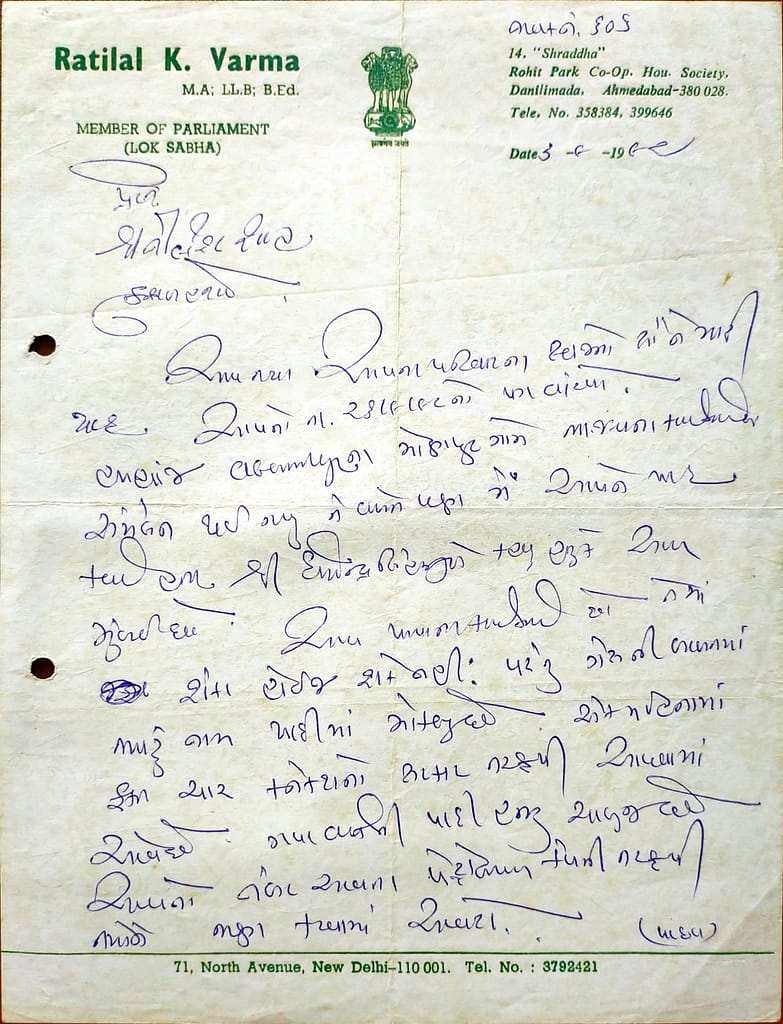
Personal handwritten reply from Member of Parliament Ratilal K. Varma, acknowledging years of grassroots political work and responding to a rare personal request made in 1992.
When a Grassroots Worker Asked for Help
In 1992, my family had shifted to Mumbai while I continued to spend much of my time in Valabhipur. During one of my visits to Mumbai, I witnessed the difficulties my family faced without a domestic gas connection.
At that time, obtaining a new gas connection often required waiting for years. It was widely known that Members of Parliament were allotted a limited quota through which genuine cases could sometimes receive assistance.
Although I had been active in public and political life since 1984, I had never sought any personal benefit, position, or favour. This was the first and only time I decided to write to Member of Parliament Ratilal K. Varma, explaining my situation and requesting help if it was possible within the rules.
What followed was far more meaningful than the request itself. In his personal handwritten reply, Shri Ratilal K. Varma not only responded with warmth but also acknowledged my long-standing commitment as a grassroots worker.
He wrote words that have remained memorable ever since:
“તમે પાયાના કાર્યકર્તા છો તેમાં શંકા હોઈ જ ન શકે.”
He also mentioned that during a BJP workers’ gathering at Monpar near Valabhipur, he had remembered me and had inquired about my whereabouts.
This letter remains a reminder of a time when relationships between public representatives and dedicated workers were built on personal acquaintance, mutual respect, and trust rather than formal distance.
“The most valuable part of this letter was not assistance, but recognition.”
──────── ✦ ────────
ORGANIZATIONAL LIFE • MUMBAI YEARS • 1993
A New Chapter in Mumbai: A Letter From Kirit Somaiya
After relocating to Mumbai in the early 1990s, I remained committed to organizational work and sought to continue my journey as a grassroots BJP worker in a new city and a new environment.
Beginning a New Political Chapter in Mumbai
In the early 1990s, at the insistence of my family, I moved to Mumbai. Although the city was new, my commitment to public and organizational work remained unchanged.
During this period, I met several BJP leaders and workers who extended encouragement and support. Among them was Shri Kirit Somaiya, whom I first met at a party program in Bhayandar. Because of the demands of the event, there was little opportunity for a detailed discussion.
Soon afterward, I wrote him a detailed letter describing my experience in organizational work, my background as a BJP worker, and my desire to continue contributing to the party’s activities in Mumbai.
This letter is his response to that correspondence — a document that marked the beginning of a long and meaningful association.
Over the years, Shri Kirit Somaiya frequently entrusted me with various organizational responsibilities and often called me to the BJP office at Dadar for party-related work.
Being comfortable in both Gujarati and Marathi, I was also assigned translation work, helping communicate organizational material across linguistic communities and strengthening outreach among party workers.
Looking back, this correspondence represents not merely a letter, but the beginning of a new chapter of public and organizational engagement in Mumbai.
“Sometimes a single letter opens the door to years of meaningful work and lasting relationships.”
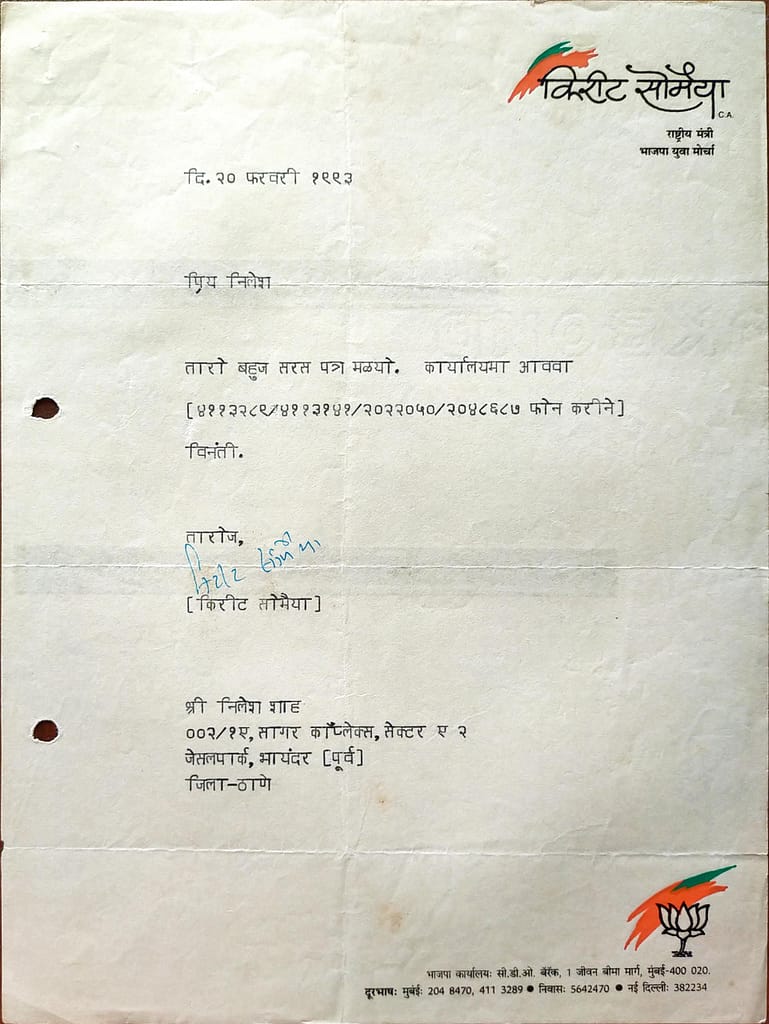
Reply received from Shri Kirit Somaiya in 1993, marking the beginning of a long association during my early years of organizational work in Mumbai.
──────── ✦ ────────
A CONTINUING JOURNEY • 2025
A Message at the Journey’s Continuing Milestone
From handwritten letters received during my youth to a personal birthday message from the Union Home Minister decades later, this document serves as a quiet reminder of a journey that has continued across generations of public life.
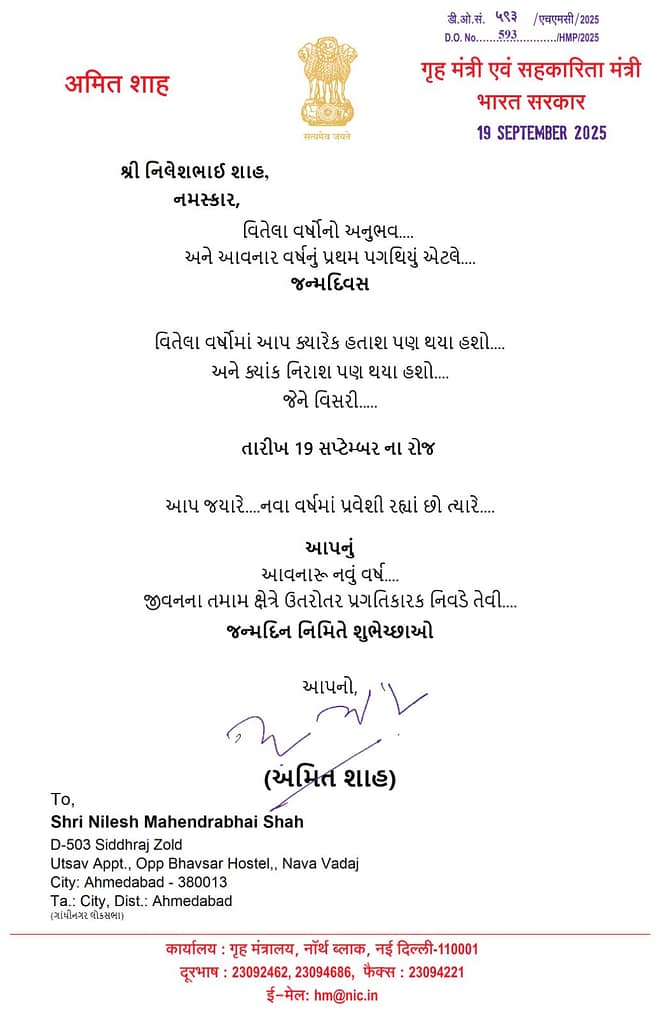
Birthday greetings received from Shri Amit Shah in September 2025, marking another milestone in a public journey that began decades earlier.
Four Decades of Public Life and Relationships
The documents preserved throughout this page span different chapters of life — journalism, public service, social engagement, grassroots politics, and community work.
Many of the individuals whose letters appear in these archives belonged to different generations and walks of public life, yet each document reflects a common thread: human connection, encouragement, trust, and mutual respect.
Receiving birthday greetings from Shri Amit Shah in 2025 became meaningful not merely because of the office he holds, but because it arrived after more than four decades of continuous public engagement and organizational work.
Seen together with the earlier letters, newspaper references, telegrams, and archival documents preserved here, this message forms a symbolic bridge between the early years of the journey and the present day.
The journey continues, but the values that shaped it — dedication, relationships, public service, and learning — remain unchanged.ships between public representatives and dedicated workers were built on personal acquaintance, mutual respect, and trust rather than formal distance.
“The years pass, the people change, but sincere relationships continue to leave their mark.”
The Journey Continues…
Public life is not defined only by positions held or achievements recorded, but by relationships built, trust earned, and memories preserved through time.
This archive is a small reflection of that continuing journey.